






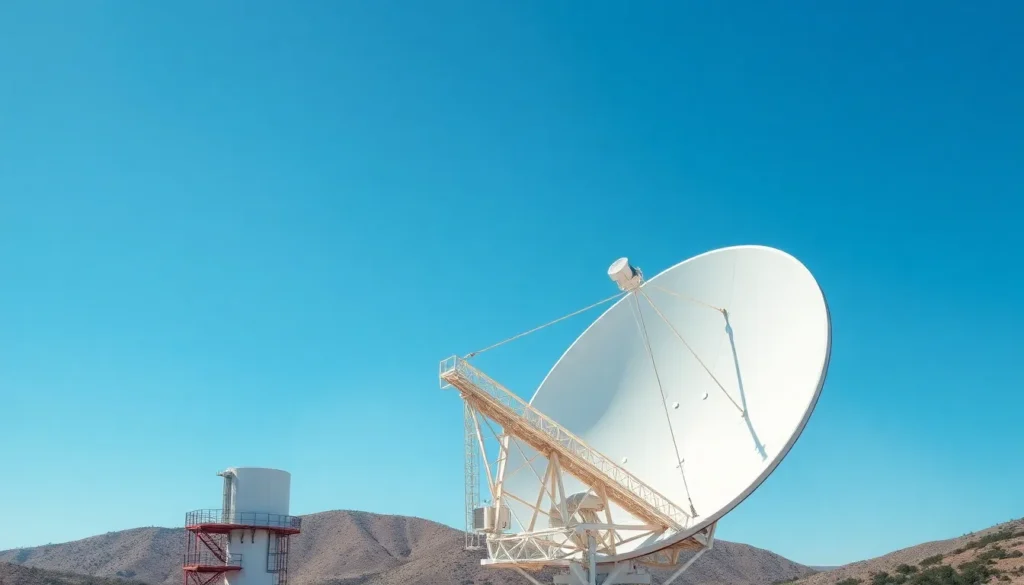
In a universe filled with cosmic mysteries and distant worlds, the Deep Space Network (DSN) serves as humanity’s interstellar telephone line. Imagine sending a text message to Mars and actually getting a reply—eventually. With its trio of massive antennas strategically placed around the globe, the DSN connects Earth to far-flung spacecraft exploring the solar system and beyond.
Overview of the Deep Space Network
The Deep Space Network (DSN) comprises three large antennas positioned strategically across the globe. These facilities are located in California, Spain, and Australia. Each antenna plays a vital role in maintaining communication with various spacecraft.
Radio waves transmit signals between Earth and distant missions. Communication with spacecraft exploring Mars, Voyager, and other celestial bodies relies heavily on this network. The DSN supports an impressive range of frequencies to facilitate data transfer. As a result, scientists receive vital information needed to analyze conditions in space.
According to NASA, the DSN handles around 38,000 individual communication sessions every year. Those sessions include transmitting commands, gathering scientific data, and relaying information back to Earth. Furthermore, the antennas are capable of receiving signals from billions of miles away, showcasing their powerful technological capabilities.
Each of these locations supports continuous communication with multiple missions. Being spread across different time zones enables the DSN to provide near-24/7 coverage. Efficiency remains a hallmark of the Deep Space Network, as coordination between these sites is crucial for mission success.
Digital technology advances have also enhanced the DSN’s effectiveness. Sophisticated signal processing techniques allow for improved data clarity and reliability. Increased bandwidth supports higher data rates, enabling quicker transmission of detailed scientific findings.
Overall, the Deep Space Network exemplifies humanity’s commitment to exploring the cosmos. This extensive communication system underpins missions that expand knowledge of our universe.
History and Development
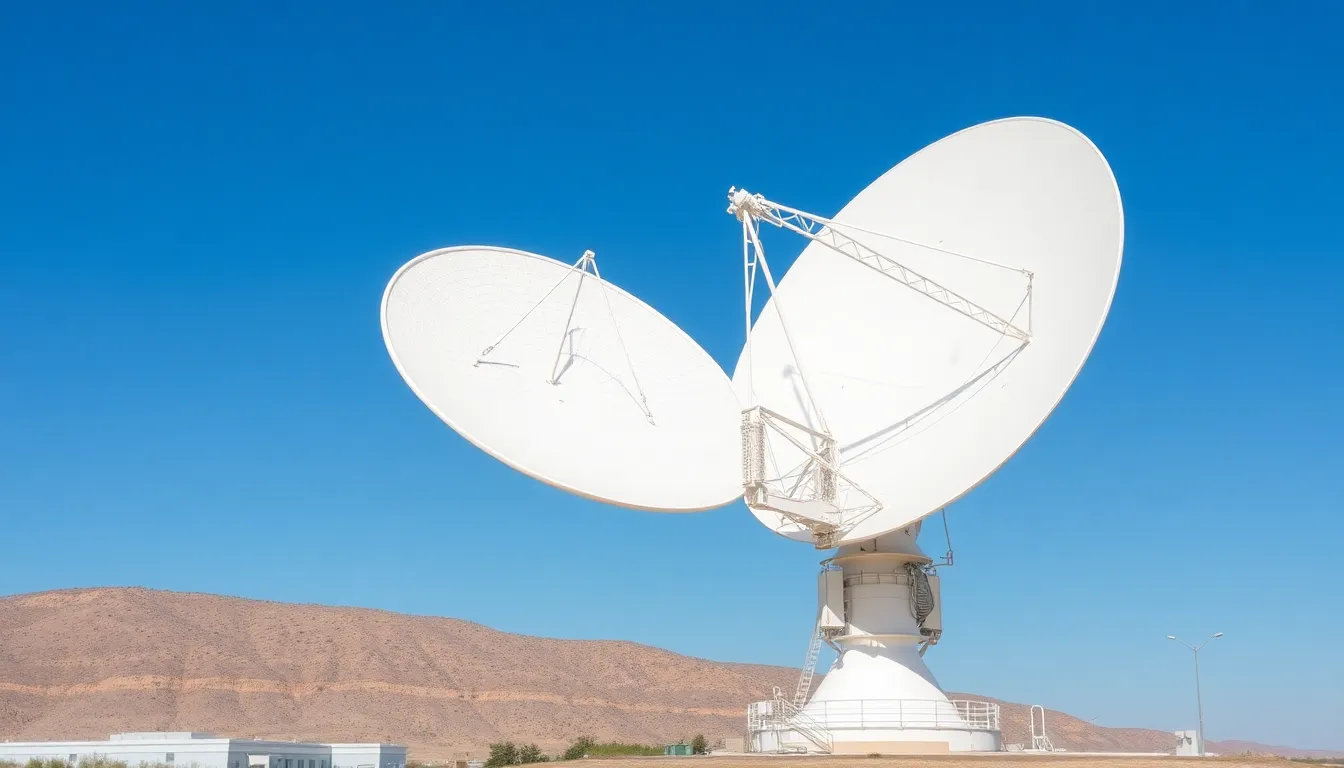
The development of the Deep Space Network (DSN) reflects decades of innovation and strategic planning. This system has played a vital role in advancing space exploration.
Early Initiatives
NASA established the first version of the DSN in 1963 to support the Mariner missions. The initial setup included antennas located in California, which managed communication with nearby spacecraft. As missions expanded beyond the Moon, the need for additional facilities grew. By adding sites in Spain and Australia, NASA improved global coverage. The network ensured continuous contact with missions exploring farther regions of the solar system, marking a significant step in deep space research.
Key Milestones
Several milestones highlight the DSN’s importance in space exploration. In 1976, it supported the Viking missions, which successfully landed on Mars and transmitted valuable data. The DSN also played a crucial role in the Voyager missions that launched in 1977, allowing scientists to receive data from the outer planets. In 1990, it facilitated the Hubble Space Telescope’s deployment, enhancing astronomical observations. More recently, advancements in technology have led to increased efficiency and data capacity. The system continues to adapt and upgrade, ensuring its relevance for future interstellar missions.
Components of the Deep Space Network
The Deep Space Network comprises several vital components that enable effective communication with distant missions.
Ground Stations
Ground stations play a crucial role in DSN operations. Located in California, Spain, and Australia, these stations house large antennas designed for deep-space communication. Each station supports a range of frequencies that accommodate diverse mission requirements, facilitating data transmission and command reception. The geographical distribution of these stations provides nearly continuous coverage as the Earth rotates, ensuring no gaps in communication. NASA employs these ground stations to manage about 38,000 communication sessions yearly, demonstrating their importance in maintaining contact with multiple spacecraft simultaneously.
Spacecraft and Technology
Spacecraft equipped with advanced technology allow for seamless interaction with ground stations. High-gain antennas on spacecraft transmit signals back to Earth, ensuring data integrity during long-distance communication. Various instruments aboard these spacecraft gather scientific information, which the DSN receives, processes, and relays to scientists on Earth. Advances in digital technology enhance signal clarity, further improving data transmission speed. Multiple spacecraft utilize the DSN, each contributing unique insights into space exploration, thereby enriching humanity’s understanding of the cosmos.
Significance of the Deep Space Network
The Deep Space Network serves as a vital link between Earth and various space missions, enabling interstellar communication and data exchange. Its strategic antennas facilitate crucial support for numerous explorations.
Supporting Space Missions
Supporting a multitude of space missions, the Deep Space Network maintains communication with numerous spacecraft. Each of the three ground stations plays a crucial role in ensuring command transmission and data retrieval. Continuous coverage is achieved as the antennas orbit the Earth, allowing near-constant contact with missions such as those exploring Mars and the outer planets. Approximately 38,000 communication sessions occur annually, reflecting the DSN’s commitment to facilitating deep-space exploration. Ongoing upgrades enhance signal clarity and bandwidth, enabling efficient communication with both current and future missions. Ground station technology adapts to increasing mission demands, ensuring sustained support for evolving scientific goals.
Contributions to Scientific Discoveries
Contributions to scientific discoveries stem from the Deep Space Network’s ability to relay invaluable data directly to scientists. Data gathered from various missions provides insights into the solar system and beyond. Instruments onboard spacecraft transmit findings back to Earth, where the DSN processes these signals for analysis. Significant discoveries, such as insights into Martian geology and the composition of asteroids, arise from the collaborative efforts of the DSN and mission teams. Continuous advancements in communication technology foster quicker data transmission, allowing researchers to reinterpret findings rapidly. This synergy between the DSN and spacecraft leads to groundbreaking advancements in humanity’s understanding of the universe.
Challenges and Future of the Deep Space Network
The Deep Space Network faces various challenges while preparing for future missions and advancements. The continuous need for rapid technological upgrades and improvements remains crucial as missions evolve.
Technological Advances
Recent technological advances significantly enhance the capabilities of the DSN. Increased processing power allows for more efficient data management during high-demand missions. New software improvements streamline communication protocols, ensuring faster relay of information. Enhanced antenna designs enable better signal reception and transmission. NASA also focuses on integrating advanced robotics to automate some ground processes, increasing efficiency. As bandwidth demands grow, enhancements in digital signal processing ensure clearer communication. Investments in cybersecurity protect sensitive data transmitted across vast distances while maintaining the network’s integrity.
Expansion Plans
Expanding the Deep Space Network appears vital for accommodating upcoming missions. Additional ground stations could enhance global coverage, providing support for more spacecraft simultaneously. Locations in the Southern Hemisphere are being considered to counteract existing coverage limitations. As exploration extends beyond traditional boundaries, a wider network will help maintain contact with distant missions. Furthermore, collaborating with international space organizations may contribute to shared resources and knowledge. Plans for upgrading existing antennas aim to enhance their capabilities to support new technologies. Following these strategic initiatives helps ensure that the DSN remains at the forefront of interstellar communication.
The Deep Space Network stands as a testament to human ingenuity and ambition in space exploration. Its ability to maintain constant communication with distant missions is crucial for gathering scientific data and ensuring the success of interstellar endeavors. As technology continues to advance the DSN adapts to meet the evolving needs of space missions while enhancing data transmission capabilities.
Ongoing investments in infrastructure and international collaborations promise to strengthen the DSN’s role in future explorations. With each new discovery the network not only deepens humanity’s understanding of the cosmos but also inspires the next generation of explorers. The DSN truly embodies the spirit of exploration and the quest for knowledge beyond our planet.